
Home Materials Guide

Engraving materials guide.
Which material fits your application.

We work with four core materials for engraved identification: two-ply engraving laminate, brass, anodized aluminum, and stainless steel. We also engrave other materials for custom projects when appropriate. This guide explains what each core material is and where it fits, so you can specify the right one.
Request a quote Call (530) 895-8448
4.9 · 32 Google reviews
Engraved compliance placards produced by Recognition Products
24–48 HRS
Standard ship time
4 CORE MATERIALS
Featured in this guide
LIVE PHONE
Real people. Always.
How our identification is made

Engraved, not printed.

Every material in this guide is used for engraved identification products we manufacture in-house.

The materials covered in this guide are for engraved identification. We do not use these materials for decals, stickers, or vinyl labels.

Which material to choose depends on the environment, the mounting method, the required format, and any facility or customer specification. Tell us the application and we can help identify suitable options at the quote stage.

4
Core materials
LAMINATE Two-ply engraving laminate — colored cap over a contrasting core.
METALS Brass, anodized aluminum, and stainless steel.
CUSTOM Other materials engraved for custom projects when appropriate.
The materials

Four core materials, matched to the job.

Two-ply engraving laminate
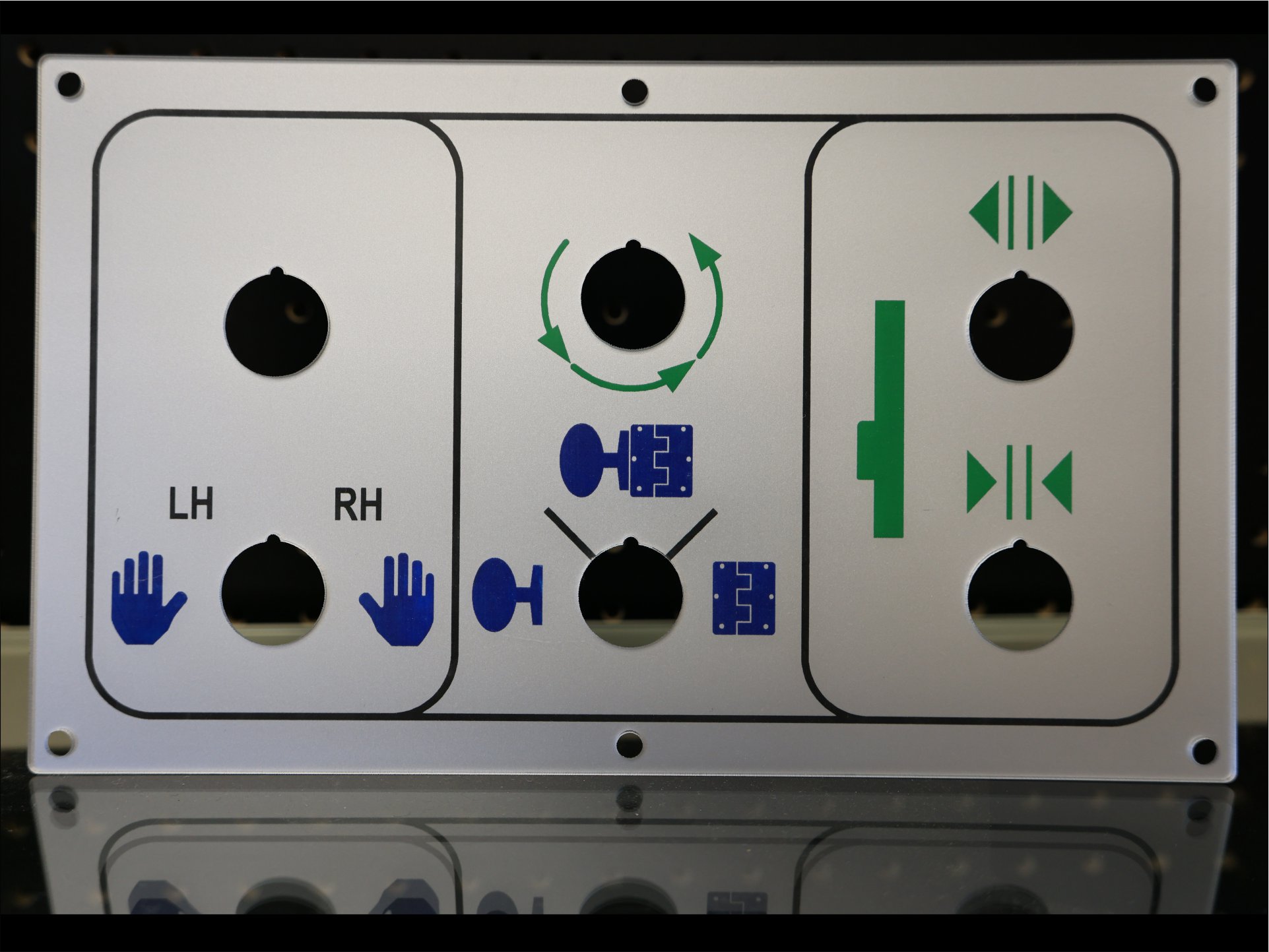
A rigid engraving laminate with a colored cap layer over a contrasting core, so the legend appears in a contrasting color. Common for panel labels, control plates, placards, and general identification, and available in a wide range of color combinations. Non-conductive engraving materials are available for applications where the customer specification requires them. Note: “phenolic,” “lamacoid,” and modern acrylic or ABS engraving laminates are related terms but do not always describe the same substrate — we confirm the appropriate material for each job.
Brass
A traditional gold-tone metal used for valve tags, identification plates, dedication and memorial plates, and executive nameplates — applications where a classic metallic appearance is specified.
Anodized aluminum
A lightweight metal with color introduced through the anodizing process. Used for equipment nameplates, asset tags, and identification programs. Tell us the environment and format and we can confirm suitable options.
Stainless steel
A durable, corrosion-resistant metal for demanding environments. 304 is the common general-purpose grade; 316 adds molybdenum and provides greater resistance in many corrosive environments, particularly where chlorides are present. Specified where the environment or customer specification calls for it.
Custom materials
Beyond the four core materials, we engrave other substrates — including wood and other suitable materials — for custom projects when the application calls for it. Send the details and we can confirm what fits.
How to choose

What decides the material.

These are the factors that usually determine which engraved material is right for an application. Tell us the application, environment, and any customer or facility specification, and we'll help identify suitable material options.

Environment
Indoor, outdoor, or harsh
UV exposure, chemicals, wash-down, heat, moisture, and other environmental conditions can affect material selection. Tell us where the identification will be installed and any material requirements in the project specification.
Electrical
Non-conductive requirement
Where a non-conductive material is required in or around electrical equipment, non-conductive engraving materials are available. We confirm the material and relevant properties for the product selected.
Appearance
Formal or metallic look
Brass gives a traditional gold-tone finish for valve tags, dedications, and executive plates. Stainless steel gives a modern metallic look.
Program use
Asset and equipment identification
Anodized aluminum is a lightweight option for asset tags, equipment nameplates, and identification programs.
Format
Size, mounting, holes
Required dimensions, hole patterns, adhesive or drilled mounting, and legend layout all factor into the material and how it is finished.
Specification
Customer or facility standard
If a drawing, facility standard, or customer specification calls for a specific material, we manufacture to it. We can also use an existing tag, sample, photo, or facility standard to reproduce the layout and identify an appropriate material.
Frequently asked

Materials, answered.

Are the materials in this guide printed or engraved?
The materials covered here are for engraved identification products. We also produce other product types, including full color name tags, but those are outside the scope of this materials guide.
Are phenolic, lamacoid, and engraving laminate the same thing?
These terms are often used interchangeably in the identification industry, but they do not always describe the same substrate. Traditional phenolic material and modern acrylic or ABS engraving laminates are different materials. We confirm the appropriate material for each job based on the customer's specification and application.
Do you have non-conductive material for electrical work?
Non-conductive engraving materials are available for applications where the customer specification requires them. Tell us the requirement and we'll confirm the material and relevant properties for the product selected.
What’s the difference between 304 and 316 stainless steel?
304 is the common general-purpose grade. 316 adds molybdenum and provides greater resistance in many corrosive environments, particularly where chlorides are present.
Which material is best for outdoor or harsh environments?
Stainless steel and properly selected anodized aluminum can both be used outdoors. For corrosive environments, the appropriate material depends on the specific exposure and customer specification. Tell us where the identification will be installed and we'll help identify an appropriate option.
Can you match the material on an existing tag?
Send a sample, photo, or facility template. We can use it to reproduce the dimensions, colors, layout, and mounting configuration and identify an appropriate matching material. A physical sample lets us get closest to the original.
Do you determine which material my code or specification requires?
We manufacture to the material, content, and format you provide, and we can help identify suitable material options for an application. We do not perform engineering studies, determine hazard levels, approve compliance, or act as the authority having jurisdiction — the governing requirement comes from your drawing, specification, or adopted code.

Not sure which material you need?

Send the application, the environment, and any drawing or specification. We’ll help identify suitable material options, confirm the format, and send a proof before production. Reorders match the approved layout already on file. Engraved in-house in Chico since 1982.